Buoyancy Control Scuba Diving: The Skill Every New Diver Needs


 Published: Nov 17, 2026
 8 min read
Summary
A practical guide for new divers on the four building blocks of buoyancy control: weighting, breathing, trim and small BCD adjustments. Learn why good buoyancy makes every dive calmer and more efficient.
Ask an experienced diver what separates a smooth dive from a clumsy one and the answer is almost always buoyancy. Buoyancy control is the ability to hover at a chosen depth without kicking up or sinking down, and it is the one skill that makes nearly everything else in scuba diving easier. For a new diver, it is also the skill that takes the longest to feel natural.
The good news is that buoyancy is not a mystery. It comes down to four things you can learn and practice: how much weight you carry, how you breathe, how your body sits in the water, and how you use your BCD. Get those four working together and the rest of your diving gets calmer.
Why buoyancy matters so much
A diver with poor buoyancy spends the whole dive correcting. They drift up, kick down, add air, dump air, and then repeat the cycle. Every correction burns energy and air, which means a shorter dive and a tired diver. Constant fussing with gear also pulls attention away from what you came to see.
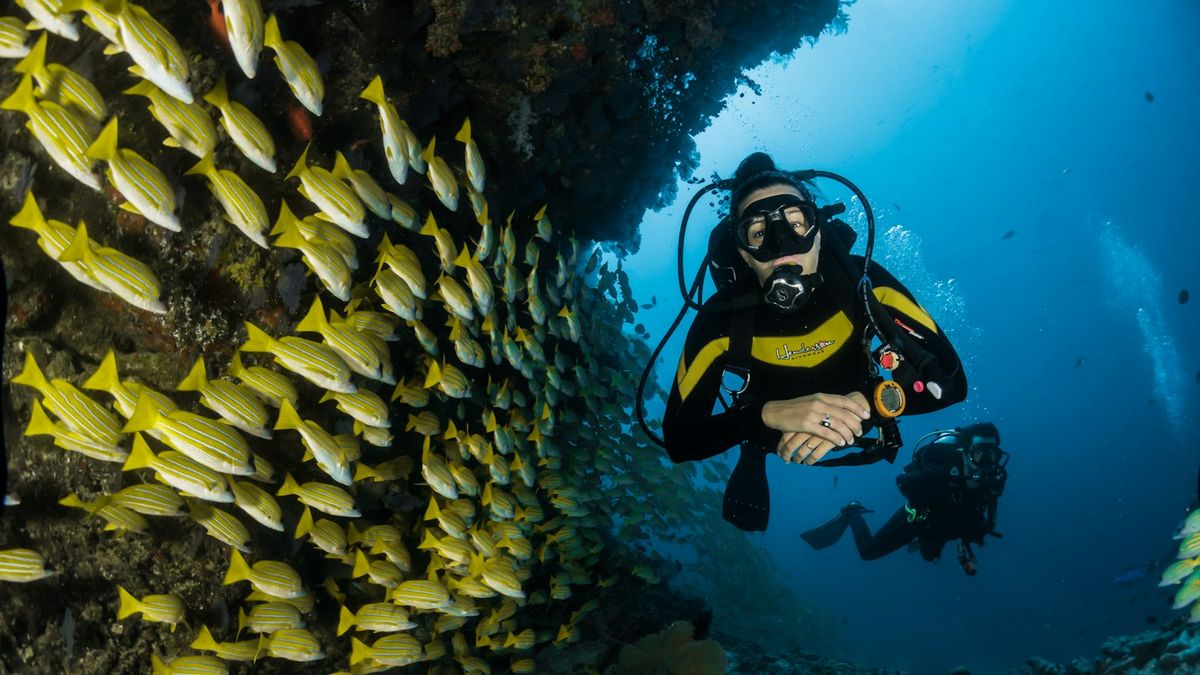
A diver with good buoyancy barely seems to move. They hang level in the water, make slow fin strokes, and use their air at a steady pace. The dive feels relaxed because the diver is not fighting the water. That calm is not luck. It is the result of getting the basics right before the dive even starts.
Start with your weighting
Everything in buoyancy begins with how much lead you wear. Too much weight and you spend the dive pumping extra air into your BCD just to stay level. Too little and you cannot descend or hold a depth near the end of the dive when your tank is lighter. Both problems make fine control harder.
The goal is to carry just enough weight to hover at the end of the dive. A simple check is to float at the surface in a normal breath, with your BCD empty. You should float at about eye level, and sink slowly as you exhale. If you sink straight away with lungs full, you are likely carrying too much.
Your correct weight changes with your exposure suit, your tank and the water you dive in. Do not assume last season's number still works. Recheck it any time your gear changes, and write down what works so you have a starting point next time.
Use your breath as a fine control
Once weighted properly, your lungs become your most precise buoyancy tool. A full breath makes you rise slightly and a full exhale makes you sink slightly. Your lungs hold a lot of volume, so even normal breathing causes a small, gentle rise and fall in the water.
Breathe slowly and steadily. Long, deep breaths with no pauses give you smooth control, while quick shallow breaths or holding your breath do the opposite. Never hold your breath while diving. Instead, think of a continuous, relaxed rhythm in and out.
For small depth changes, try adjusting with your lungs before touching your BCD. If you are sinking a little, take a slightly fuller breath and hold that fuller lung volume for a few cycles. If you are rising, exhale a little more fully. This takes practice, but it saves you from a lot of unnecessary inflating and dumping.
Get your trim right
Trim is how your body sits in the water, and it affects buoyancy more than most new divers expect. The ideal is a flat, horizontal position, head and feet at about the same level. In that position you slice through the water with less effort and your fin strokes push you forward instead of down or up.
If your feet sink or your head sits too high, you end up fighting your own posture. Often the fix is moving weight, not adding air. Shifting a weight pocket, adjusting where your tank sits on your back, or moving a weight from your hips to your upper body can change how level you float.
Small habits help too. Keep your arms relaxed and in front of you. Bend your knees slightly so your fins sit higher. Avoid kicking from the knees alone, since that can drive you into a head-up angle. Ask a dive buddy or instructor to watch your position and tell you what they see.
Small BCD adjustments, not big ones
The BCD is your coarse control, and new divers tend to use it too heavily. A long burst of air gives you a big change in buoyancy, and then you overshoot your target depth and have to dump it all again. Short, small inputs are far easier to manage.
Add or release air in brief taps, then wait a few breaths to see what happens. Your body needs a moment to respond, and a change that looks small at first may keep working as you rise or sink. Patience here is part of the skill.
- Make one small adjustment at a time.
- Wait and breathe before making another.
- Check your depth gauge, not just how it feels.
- Remember that air in your BCD expands as you rise, so ease off before you drift up.
Over a dive your tank gets lighter as you use air, so you will gradually need a little less air in the BCD to stay level. Keep an eye on this and adjust in small steps rather than waiting for a large correction later.
Practice the skill on purpose
Good buoyancy comes from repetition, so give yourself time to work on it. Try hovering for a minute or two at a steady depth without using your hands. Notice how your breath moves you, and try to stay level with only gentle breathing. When you can hold a spot comfortably, test it again while turning slowly or changing direction.
Do these drills in calm, shallow water where you can stop and rest if you need to. A pool or sheltered site is a good place to focus. Ask an instructor to check your weighting and trim, since they can spot problems you cannot feel yourself.
Do not expect perfect results right away. Buoyancy tends to improve a little with every dive, and most divers say it clicks one day without warning. Keep your weighting honest, breathe slowly, stay flat in the water, and use your BCD in small taps. Do those four things consistently and your dives will feel smoother from the first minute to the last.